
Arizona has a reputation for being too dry for mold. It is the first thing Sierra Vista homeowners say after a leak – and it is the reason so many of them end up with mold anyway. The desert air outside your walls is dry. The inside of a wet wall, a soaked subfloor, or a damp cabinet cavity is a different climate entirely: warm, dark, and humid for days. Mold does not care about the weather forecast; it cares about the moisture in your materials.
The good news is that mold after water damage is one of the most preventable problems in home restoration. It comes down to speed, real drying, and knowing where moisture hides.
Key things to remember
- Mold can start growing within 24-48 hours on wet drywall, wood and insulation – the clock starts at the leak, not at the discovery.
- Surface-dry is not structure-dry: wall cavities and subfloors stay wet long after floors feel dry.
- Professional structural drying with moisture-meter verification is the reliable way to beat the window.
- Monsoon season, swamp coolers and slow plumbing leaks are the top mold setups in Cochise County homes.
- A musty smell after a water event is a warning sign – get an inspection, not a bottle of bleach.
The 24 to 48 hour window
Mold spores are already in every home, floating in from outside and settling in dust. They need exactly two things to become a colony: moisture and a food source. Wet drywall paper, wood framing, carpet backing and insulation provide both. In warm indoor conditions, germination can begin within 24 to 48 hours of wetting, and a colony can be established – and spreading spores of its own – within days.
That timeline drives everything in professional restoration. Extraction and structural drying are not scheduled at leisure; they are a race against a biological clock. Every step in this guide is about winning that race.
| Time since wetting | What is happening |
|---|---|
| 0-24 hours | Materials saturate; water wicks into walls, flooring and cabinetry |
| 24-48 hours | Mold spores on wet materials can begin to germinate |
| 2-7 days | Colonies establish inside cavities; musty odours often appear |
| 1 week + | Growth spreads through connected cavities; remediation scope and cost grow |
Dry the structure, not the surface
Remove the water completely
Extraction matters more than airflow at the start. Standing water and saturated carpet padding hold gallons against your subfloor; professional extraction removes the bulk so drying equipment can finish the job. Mopping and towels handle the visible water and leave the rest.
Dry with sized equipment – and verify
Industrial dehumidifiers and air movers are placed according to the size of the wet area and the materials involved, then adjusted as readings change. The job ends when moisture meters confirm the materials have reached their dry standard – including inside wall cavities, checked through small access points or from the baseboard line. Household fans and an open window cannot do this, which is why “it felt dry” is the most expensive sentence in water damage.
Treat vulnerable surfaces
Antimicrobial treatment on affected materials during drying discourages growth while moisture levels fall. It is a standard part of professional restoration and one of the steps most often skipped in DIY attempts.
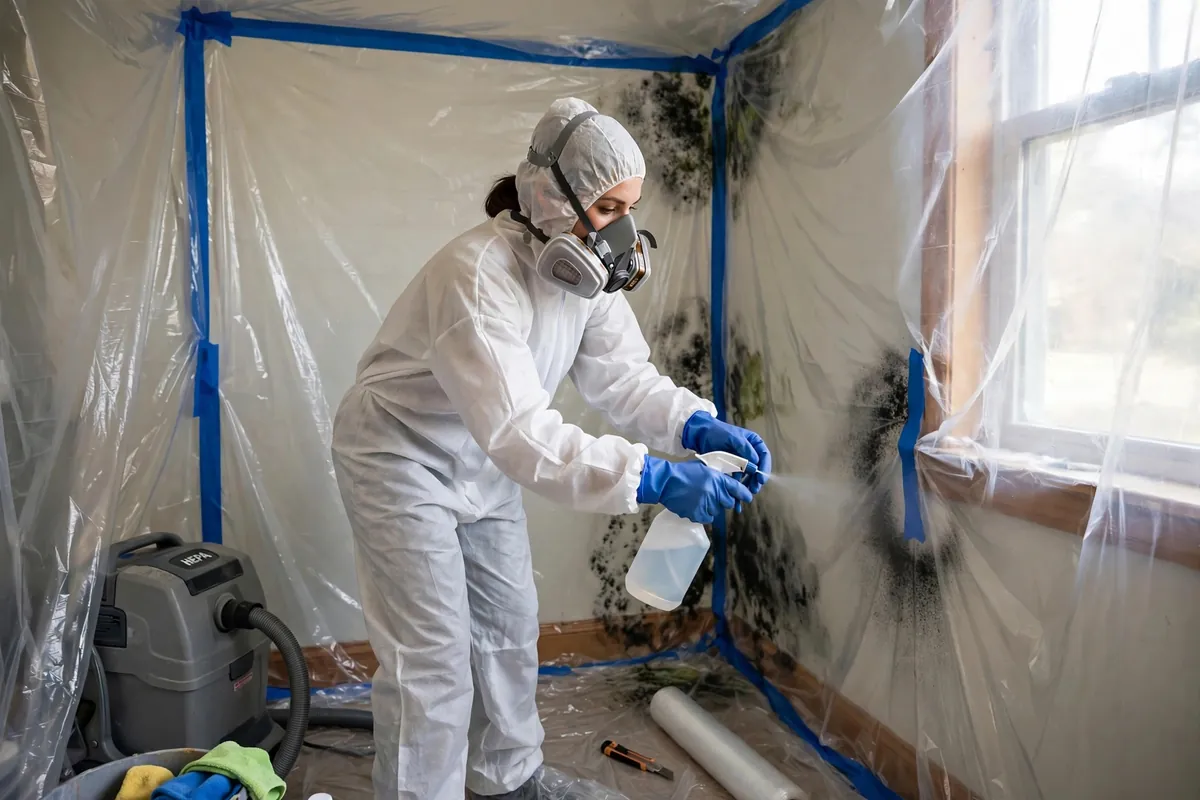
Where moisture hides in Arizona homes
- Wall cavities. Water wicks up drywall and pools on the bottom plate, wetting insulation that can hold moisture for weeks.
- Under flooring. Laminate, vinyl and tile over slab can trap water against the subfloor or slab edge invisibly.
- Cabinets and vanities. Sink leaks soak cabinet floors and the wall behind them – often discovered only by smell.
- Swamp cooler lines and pads. A Cochise County staple: slow cooler leaks wet roofs, ceilings and ducting all summer long.
- Water heater closets and pans. Small, repeated leaks keep the area permanently damp – ideal mold conditions.
- Monsoon intrusion points. Roof penetrations, window seals and stucco cracks admit wind-driven rain that soaks insulation from the top down.
If a water event touched any of these, a moisture inspection is worth far more than it costs. Our mold inspection and testing service maps moisture behind surfaces and confirms whether growth has started.
Habits that keep mold from coming back
- Fix small leaks immediately. The slow drip under a sink is the most common mold source we find – it has usually been feeding a colony for months.
- Watch the water heater and cooler. Inspect pans, lines and pads at the start of cooling season and before monsoon season.
- Keep indoor humidity in check. Bathrooms vented outside, kitchen exhaust used, and AC maintained all reduce background moisture.
- After any water event, verify dryness. If a pipe, appliance or roof leaked into building materials, get a moisture reading – even if you cleaned it up yourself.
- Respond to the smell. A new musty odour in one room is information. Mold found early is a small remediation; mold found late is a construction project – compare the scopes on our black mold removal page.
Mold after water damage is not bad luck. It is a timeline – and timelines can be beaten. Extract fast, dry the structure, verify with meters, and the 48-hour window closes with nothing growing in it.
Frequently Asked Questions
How soon can mold grow after water damage in Arizona?
Mold can begin growing within 24 to 48 hours on wet drywall, wood, carpet backing and insulation – even in Arizona. Our dry outdoor air does not reach the inside of a wet wall cavity, which stays humid enough for colonies to establish.
If the surface feels dry, is my home safe from mold?
Not necessarily. Surfaces dry days before the materials behind them. Moisture trapped in wall cavities, under flooring, or inside cabinetry is the most common source of “surprise” mold weeks after a leak. A moisture-meter check is the only reliable all-clear.
Does running the air conditioner prevent mold after a leak?
Air conditioning lowers indoor humidity and helps, but it cannot dry saturated building materials fast enough on its own, and it does nothing for water trapped inside walls. It is a support measure, not a substitute for extraction and structural drying.
What are the signs mold is already growing after water damage?
A persistent musty or earthy smell, new discoloration or staining on walls and ceilings, bubbling paint, warped baseboards, and allergy-type symptoms that improve when you leave the house. If you notice these after a water event, schedule a mold inspection rather than scrubbing the surface.
When should I call for a mold inspection?
Any time water sat for more than a day, soaked drywall or flooring, came from a hidden leak, or when musty odours or visible growth appear afterwards. An inspection with moisture mapping finds growth behind surfaces before it spreads.
Reliable Water Damage Help for Sierra Vista Homeowners: Grok Restoration
Homeowners across Sierra Vista and Cochise County rely on Grok Restoration for fast water extraction, structural drying and mold remediation, day or night. One call brings a local team that stops the damage, dries the structure, and verifies the result with moisture readings.
Grok Restoration, 140 6th St, Sierra Vista, AZ 85635 · (520) 123-456
Hours: Open 24 hours, 7 days a week
Water Damage Restoration in Your Area
Standing water? A pipe burst overnight? A musty smell that will not go away?
Our team restores homes and businesses across Cochise County, including Huachuca City, Bisbee, Tombstone, Benson and Douglas – see all service areas.
Don’t see your town listed?
We may still serve your area – call us now to confirm your location.
Call: (520) 123-456